We use cookiesThis site uses cookies to analyze traffic and enhance your experience. Learn more

Program Overview

As a medical observer at A Personal Physician, a premier concierge internal medicine clinic in Encinitas, California, you would immerse yourself in a sophisticated and structured educational environment. This program is meticulously designed to go beyond the basics, fostering a deep, comprehensive understanding of patient care while cultivating the essential practical skills necessary for excellence in the field of internal medicine.

Daily Didactic Sessions

This opportunity is particularly tailored for college students exploring healthcare careers or early-career professionals seeking to refine their knowledge for medical school clinicals, standardized tests, or board certifications. Our clinic emphasizes personalized, high-quality care, where physicians deliver comprehensive services to a select patient base, including executive health assessments, preventive strategies, and enhanced accessibility elements that distinguish concierge medicine from traditional practices.

Benefits Of Our
Observership Program

Female doctor wearing a white coat and mask holding a pen and a blank notebook in a medical meeting.

Daily Didactic Sessions

Each day opens with a teaching session led by Dr. Brar or another practicing internist. We work through one core topic at a time — cardiovascular disease, endocrine workups, geriatric care, chronic disease management — and anchor it to a patient we're actually seeing that week. The sessions are short, conversational, and built around the questions you bring.
Three medical professionals having a discussion, with one nurse in blue scrubs explaining to two doctors.

Interactive Case Discussions

After the teaching session, we open the floor. This is the part most observers find the most useful: working through a diagnosis out loud, debating what we'd order next, and talking through the judgment calls that don't appear in textbooks — including the ethical ones that come up specifically in concierge practice.
Three medical professionals having a discussion, with one nurse in blue scrubs explaining to two doctors.
Female scientist wearing safety goggles and a teal lab coat focusing on an experiment with a male scientist in the background.

Clinical Observation Rotations

The rest of the day is clinical. You shadow physicians during patient visits in the clinic and at our affiliated skilled-nursing facilities, and you'll see something most students don't get to see: how a 60-minute appointment changes the conversation. History-taking goes deeper, physical exams aren't rushed, and treatment plans actually account for the patient's life — not just their chart.
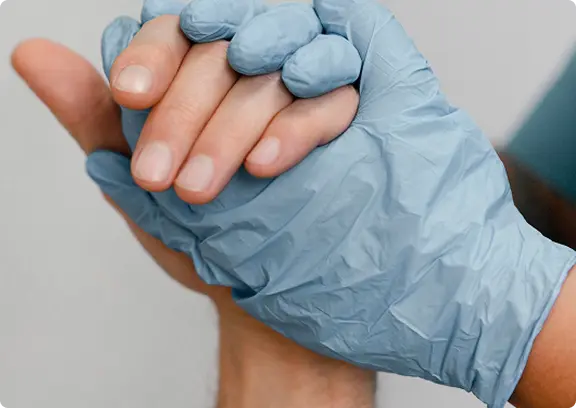
A hand wearing a blue medical glove gently holding a bare hand, symbolizing care or support.

Hands-On Exposure

Depending on your stage, you'll get into the work itself. That means interpreting labs alongside the physician, thinking through medication regimens for patients on eight or ten drugs, coordinating advanced diagnostics, and helping manage patients with several conditions at once. Every encounter happens with patient consent and full HIPAA compliance — that part isn't negotiable, but it also isn't the headline.
A hand wearing a blue medical glove gently holding a bare hand, symbolizing care or support.
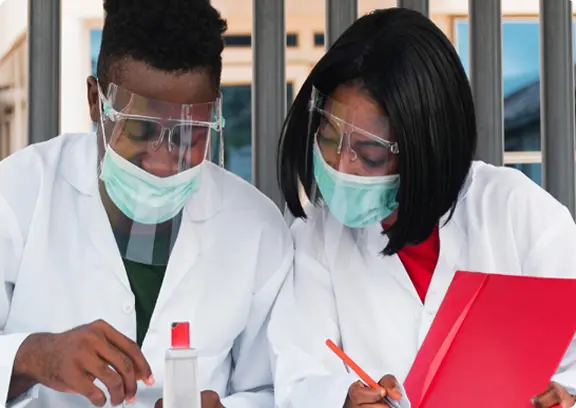
Two scientists wearing white lab coats, face masks, and safety goggles working together, one holding a red notebook and the other handling lab equipment.

Focused Reading & Assignments

Each day ends with a short reading list, picked for where you are in training. Undergraduates get foundational physiology and introductory internal medicine — the kind of reading that makes pre-med coursework click. Med students heading into clinical rotations get case-based material focused on differential diagnosis and evidence-based guidelines. If you're preparing for the USMLE or board exams, you'll get targeted assignments on high-yield topics with practice questions to work through.
Male and female scientists in lab coats discussing information on a digital tablet in a laboratory.

Mentorship & Flexibility

The program flexes around your stage. An undergraduate exploring whether medicine is the right path will get something different from a med student weeks away from clinical rotations — and we'll talk about your goals on day one to shape the experience accordingly. The mentorship is the part that doesn't change: you'll have direct, regular conversations with practicing physicians about what you're seeing, why it matters, and what to do with it.
Male and female scientists in lab coats discussing information on a digital tablet in a laboratory.
Two doctors and a healthcare professional reviewing information on a tablet in a clinical setting.

Outcomes & Benefits

Most observers leave with a clearer sense of whether primary-care internal medicine — and the concierge model in particular — is the direction they want to head. You'll see the upside up close: longer visits, real patient relationships, preventive medicine that actually happens. You'll also see the trade-offs, which matters. You'll meet practicing clinicians who can write strong letters and answer questions long after the program ends. And you'll have read enough, seen enough, and asked enough that the next step in your training feels less abstract than it did when you arrived.
Two medical professionals discussing while looking at a laptop in a clinical setting.

Tasks & Responsibilities

Under direct supervision and with patient consent, observers may:

-Sit in on patient visits for educational purposes

-Room patients and take vital signs, after enough observation to do so safely

-Review scribed notes with the provider

-Practice scribing alongside the provider during a visit
Two medical professionals discussing while looking at a laptop in a clinical setting.